October – Kampong Coconuts

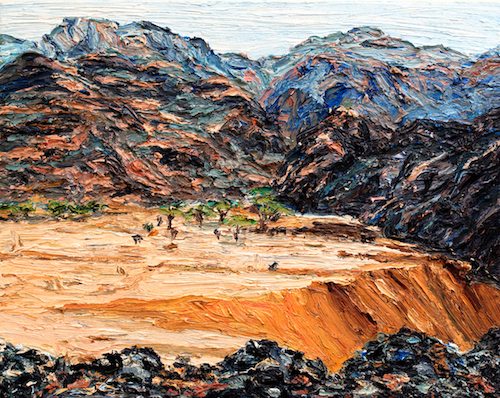
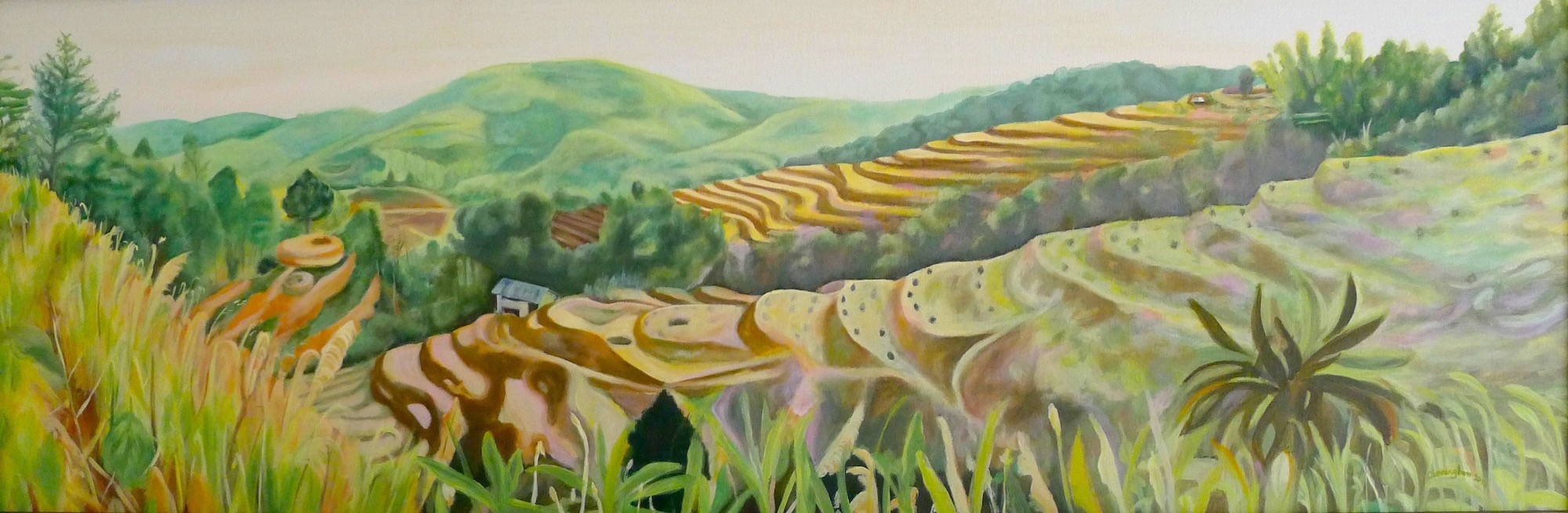
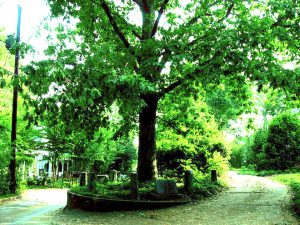
Fujairah Wadi (small) 34 x 45cm oil on canvas Niamh Cunningham 2007


简体中文

This month’s story comes from my old friend Trebas.  We used to be neighbours over 15 years ago when living in Dubai. I match a painting of a wadi in the emirate of Fujairah from those days living in the UAE with her evocative childhood memories of her grandfather’s coconut farm in Singapore.

***********************************************

Kampong  Coconuts


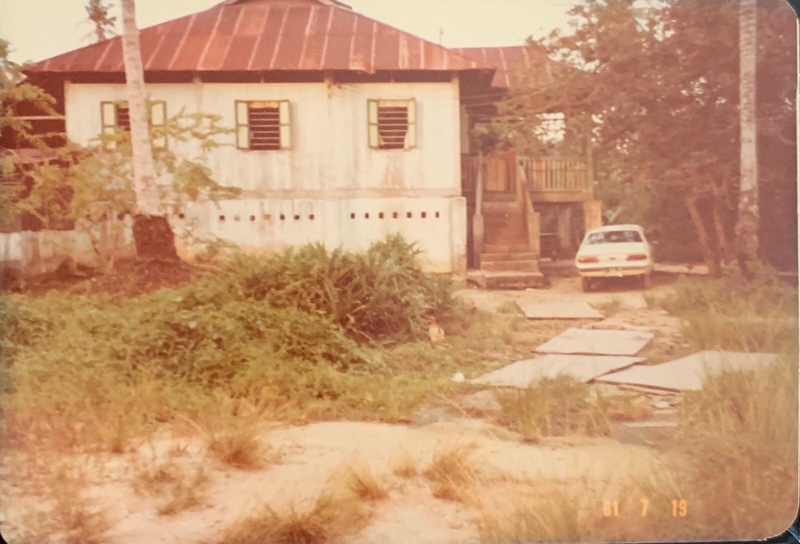
My earliest memories of trees are of coconut trees. I grew up in a kampong which was a rural village. My grandfather owned lands where coconut trees grew. I remembered workers going around with long tools and a monkey to harvest the fruits. It was fascinating to watch humans & animal working in tandem together. Till today, I am still amazed that not once were they hit by falling coconuts! Before being sold or consumed these harvested fruits became children’s toys. I remember playing among the small mountains of coconuts with my siblings & cousins, effortlessly climbing up and down and handling the fruits with agility and balance that only children have. No worries about harmful sunrays or the coconuts falling on our slipper clad feet! My favourite part was being allowed to enjoy the fresh fruit and juice. Although the juice was usually warm it was surprisingly refreshing.

Ahh. I didn’t appreciate such simple life luxury till we moved away. Unlike the children, the womenfolk in the family has a less carefree relationship with the husks of the fruit. Yes, the tough fibers of a coconut husk are great for scrubbing away grime but they made such a mess. The husks used to provide fuel for cooking produced so much smoke & soot. I can still recall my exhausted mother wiping soot from her face!

Was it the ignorance of a child and the simple acceptance of way of life, neither had I questioned the ethical issue of coconuts being harvested by animals. The monkey had been tethered to the handler, yet they had always looked so happy. I had never once witnessed an abuse. However, I am now glad to see and support companies doing away with monkey labour in their harvesting.

*************************************

Trebas Kwek, is a chartered accountant in Singapore

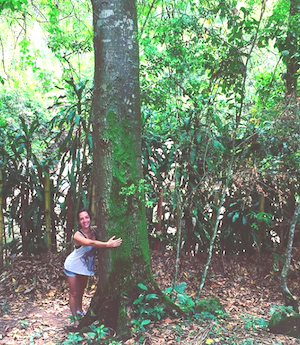
Kampong house in Singapore circa 70’s

Memory Palace of Trees 2020 is socio- ecological art practice which invites your participation to tell a story (or give some kind of information) about trees. It is a social enquiry of how to live better with the planet and with people by simply sharing stories. You are cordially invited to tell me your story of a tree or trees. (email : niamh@niamhcunningham.com) I would love to hear from you. Throughout 2020 a story will be posted with either an artwork already made or perhaps your story will inspire me to make a new work!


September _ Kosima’s corkscrew willow

Willow- Sucrose series (11.8) UV print on Aluminium 120x160cm Niamh Cunningham 2020 


简体中文

Willow- Sucrose series (11.8) UV print on Aluminium 120x160cm Niamh Cunningham 2020 

(This artwork is currently exhibited at The Pattern that Connects at Dong Yue art Museum BJ  until Oct 3 2020)

My friend Kosima is a Mother Earth kind of gal. She is a fountain of knowledge on matters ranging from where best to hike outside Beijing to what kind of non harmful detergents to use in the house. Lately we have been chatting about the willow tree.

******************************

Kosimas corkscrew willow

Willows have always been my special friends, a weeping willow that would greet me when walking first to kindergarten and then school, its branches touching the ground, inviting a child to dive under immediately feel its protecting softness.

When we moved house, I so much wished for a big weeping willow tree behind our house – and indeed we did plant it. I remember It costing 20 DM at the time. Perhaps I even paid for it from my own money. And it is still standing proud with benches my father built, circling around its big dark trunk.

Behind the house even further there were some craggy willow trees, their branches holding on to each other, calling me to find refuge on their broad easy to climb bark where I would often read books.

Later on in life,  I moved to China and when we moved to our new courtyard it was absolutely barren.

Soon after my mother arrived for the children’s easter holidays, bringing easter egg paints and chocolate eggs – and most excitingly a branch of a corkscrew willow. It served to display our easter egg creations of hand painted blown out eggs shells. During the time she visited, the branch started to grow roots in the vase just as she had hoped. So just before she left for Germany, she planted the little sapling in our courtyard, on the west side of the entrance (just realizing that is actually the direction of Germany …)

The tree grew well throughout that summer, hardened in its first ice cold Beijing winter  – and ever since fully adapted to the local climate. It has grown so tall that we cut it back a year ago to avoid breakage from strong winds. 

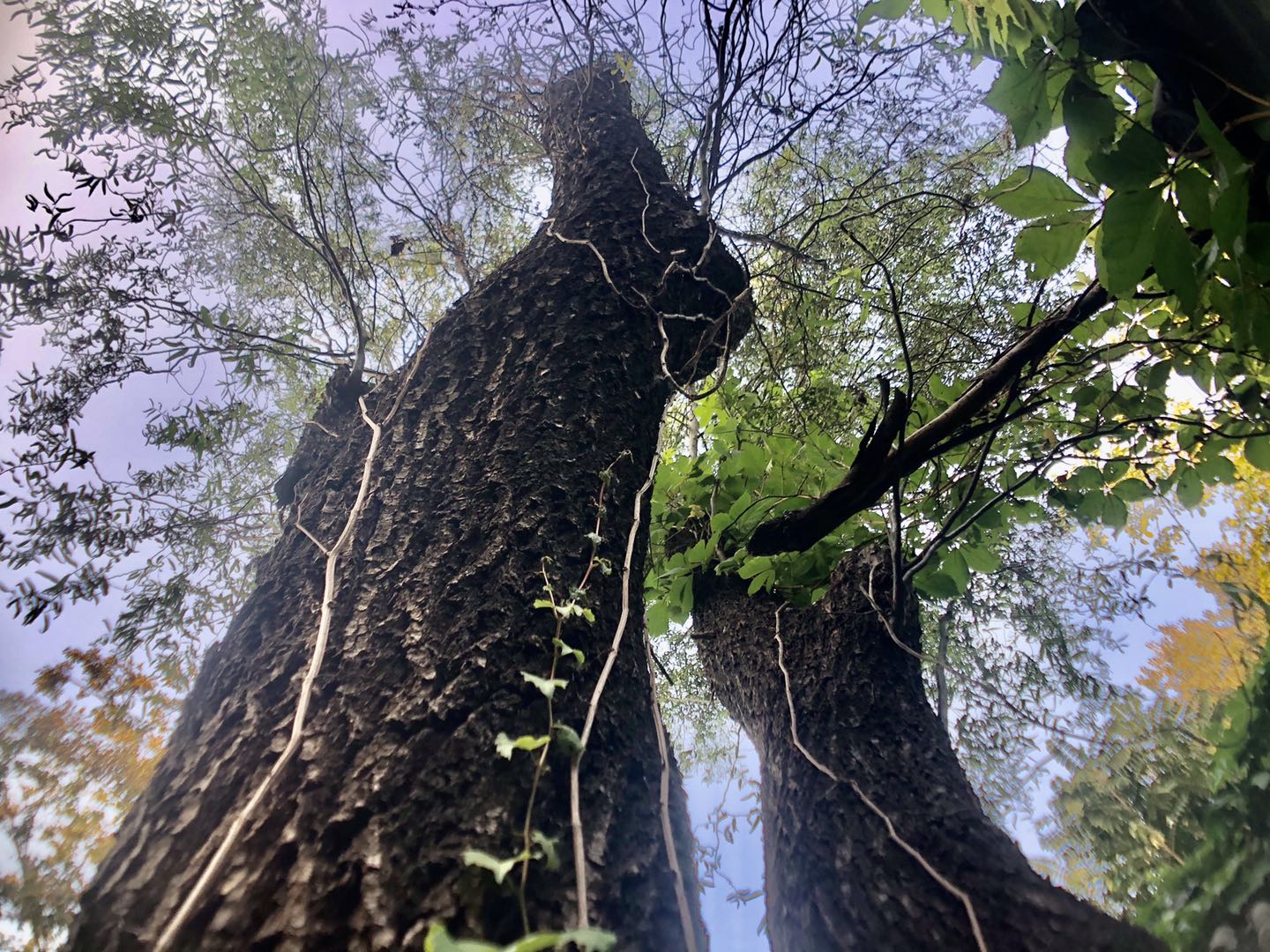
Its graceful elegant leaves and soft curly branches contrast dramatically with its strong dark core, a double stem. It gracefully and sincerely represents the presence of my mother.

*******************************************************

Memory Palace of Trees 2020 is socio- ecological art practice which invites your participation to tell a story (or give some kind of information) about trees. It is a social enquiry of how to live better with the planet and with people by simply sharing stories. You are cordially invited to tell me your story of a tree or trees. (email : niamh@niamhcunningham.com) I would love to hear from you. Throughout 2020 a story will be posted with either an artwork already made or perhaps your story will inspire me to make a new work!


Your Invitation to ‘Shared Destiny – The Pattern that Connects


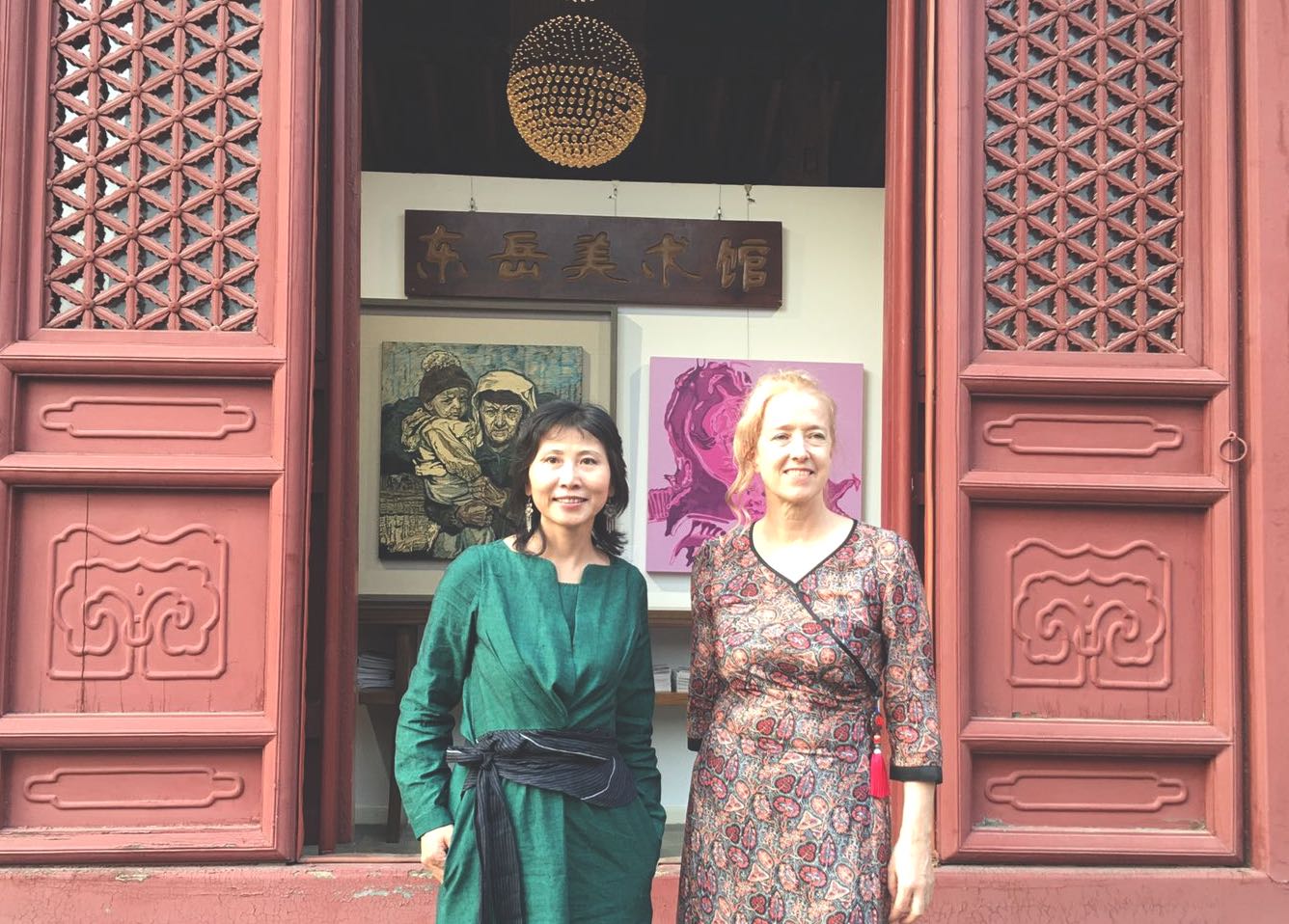
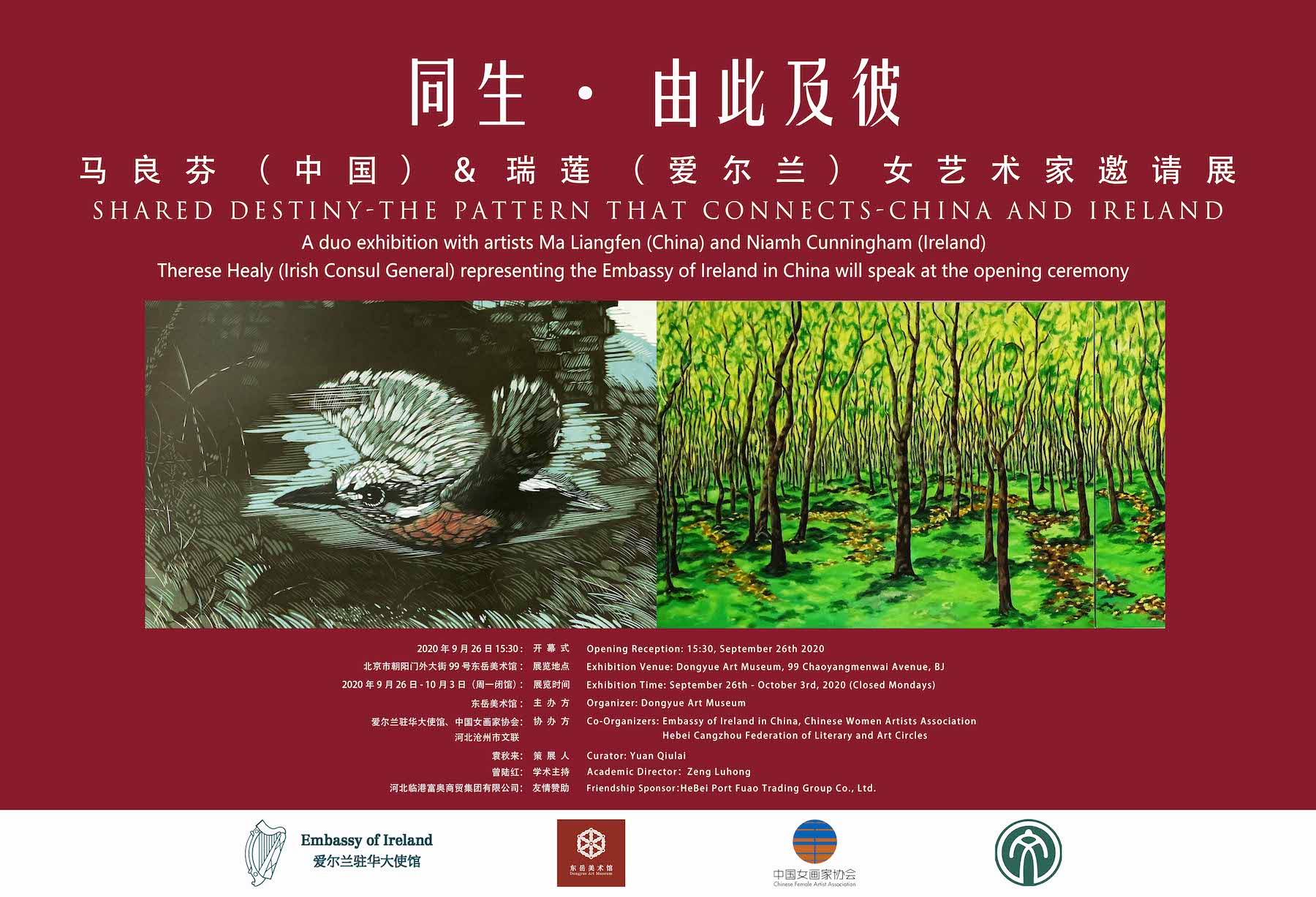
You are cordially invited to the opening of  ” Shared Destiny -The Pattern that Connects ” a duo exhibition with woodcut artist Ma Liangfen and myself ….. focussing on nature and our relationship with it . …..opens on Saturday 3.30 at Dong Yue Art Museum Beijing . The exhibition runs till Oct 3 . If you cant make the opening but would like to visit another day please contact me and I will try to be there to give you the personal tour. 


Here is the link to exhibition document preface written by academic curator Zeng Luhong


July – Emoji Trees

Early Evening Yunnan oil on canvas 2014 50 x 150 cm Niamh Cunningham 2014

简体中文

Very grateful to Sofia Ballon for this month’s tree story of a strange tree that seemed to be reappearing on her travels in Peru.

*************************

In 2015 I went on a trip to the north-central jungle of Peru with four friends.  The trip took us beyond Tarapoto where our plane from Lima had landed. We were destined to go through Gocta which has one of the highest waterfalls in the world. From there to Moyobamba a place renowned for its orchids and finally reaching the cloud forests of the southern Amazonas  Chachapoyas harboring ancient vestiges of the precolumbian culture of the same name. 


All the days spent with my friends were lovely, but it was the initial eight hour drive between Tarapoto and Chachapoyas, when I felt the closest to trees. 


As soon as we rolled onto the main road, I was surprised to see in real life and lining our travels, the same tree available as an emoji in whatsapp. Emoji design has evolved considerably since, but other than the christmas tree, I believe this was the only other tree in stock then. It was quite recognisable, circular leaves forming an elongated treetop over a slender light brown trunk. Literally, leaf by leaf, these same trees were swooshing in real life outside my window.

I immediately shared a snapchat video of the trees using the emoji. That has been lost since, but the vivid image in my mind and the sounds of my friends’ laughter at the coincidence, stay with me still. 


Before our evening arrival at Chachapoyas, we spent over three hours in Cocachimba, walking all the way to the bottom of the Gocta waterfall under the rain, in a damp and dark forest of ferns,  knobby-trunked trees, and vegetation-covered stone faces. The local birds cheered us on from their hiding spots in the canopy.


The five day affair ended back in Tarapoto, staying at a property that protects a part of the city’s forest. We have cute photos hugging enormous trees and memories of a final day well spent refreshing under their shade while dipping in the river. I have returned once more to the region, and again drove on that main road lined with “el arbolito de whatsapp”. The emojis might change and appear differently on other devices, but those trees will be safekept as such in my heart.

Sofia Ballon in Peru 

********************

Memory Palace of Trees 2020 is an ecological art practice which invites your participation to tell a story (or give some kind of information) about trees. It is a social enquiry of how to live better with the planet and with people by simply sharing stories. You are cordially invited to tell me your story of a tree or trees. (email : niamh@niamhcunningham.com) I would love to hear from you. Throughout 2020 a story will be posted with either an artwork already made or perhaps your story will inspire me to make a new work!

June – Tree Climber


Climbing towards the Symbiocene  120 x 100 cm acrylic on Canvas  Niamh Cunningham 倪芙瑞莲2020 (this painting was made in response to Anna’s story )                               

简体中文 

 “The Memory Palace of Trees’ project  has some wind in its sails with this week’s story. Delighted to have forest expert Anna Finke reveal her quirky side.


The world sometimes seems full of chains holding you down. Obligations, goals, commitments, even dreams – sometimes life seems like an eternal wheel spinning ever faster, spinning you along. Everything you do ought to have a purpose, ought to make good use of your time. Even your free time shall be designed perfectly – the right balance between working on projects, yourself, being social, “making progress” on something.

Climbing trees is none of those things. It serves no purpose. Yet, when you only climb upwards and don’t look back there is nothing more purposeful. Your body is doing something it’s inherently been designed to do, you connect with a part of yourself you forgot you had. When your hands touch that first branch then remember lessons you were never taught. They force you to confront a part of yourself you pushed aside a long time ago, buried along with the other useless things.

But it’s not just the climbing. Once arrived, there is the being. Similar to climbing, being in a tree serves no purpose, either. Even worse, there is no goal, nothing to be towards. So you stay. You feel the wood underneath your hands, observe the world around you. Slow down. And from that point of stillness, that point of purposelessness a new understanding emerges: watching the world from up there, perceiving the world the way a being that is born and dies there does, teaches you fundamental lessons. Moving forward, getting somewhere, doing something are not the only modes of living. Being is a mode. Observing is a mode. In the void that the lack of action leaves, the world has a chance to fill you with its knowledge. Because here is the thing: the world, nature, only whispers its lessons. If we humans only march on to the cacophony of noise our race produces, we will ultimately miss out on the millions of other voices, of other ways of being.

So go climb a tree. Not to get somewhere or  to do something, but the opposite: to stand still and listen to the song of the trees. It’s a quiet melody, but a beautiful one.

Anna Finke.

Anna Finke is a Project Manager working at the Asia-Pacific Network for Sustainable Forest Management and Rehabilitation (APFNet) in Beijing since 2017. For her work she travels to forests all over Asia, working with different partners to restore or sustainably manage forests in those regions. Before working at APFNet, she graduated with a Master of Forestry from the Yale School of Forestry and Environmental Studies in 2016 and a Bachelor in International Forest Ecosystem Management from Germany in 2012.

Climbing trees is actually not her job but has become somewhat of a hobby over the past years and now no tree is safe from her.


Memory Palace of Trees 2020 is an ecological art practice which invites your participation to tell a story (or give some kind of information) about trees. It is a social enquiry of how to live better with the planet and with people by simply sharing stories. You are cordially invited to tell me your story of a tree or trees. (email : niamh@niamhcunningham.com) I would love to hear from you. Throughout 2020 a story will be posted with either an artwork already made or perhaps your story will inspire me to make a new work!


Week 21 Ligustrum Leaves

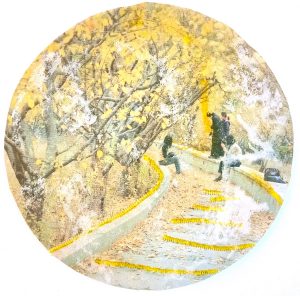
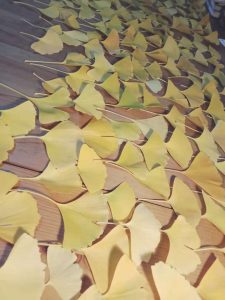
Yellow Brick Road -sucrose series -mixed media diam 30cm Niamh Cunningham 2020 image 17.1.2020

简体中文

For this week’s tree story I’m very pleased to have a contribution from environmental photographer and writer Kyle Obermann based in Chengdu. He has been working with corporate partners since 2014 to promote and support local conservation groups protecting China’s last wilderness. I met him a few years ago giving a talk about his travels through mountains and forests in China……


My dad loves live trees. He would tell you so in a heartbeat. We grew up planting trees in hopeless places across our yard in central Texas and our jurisdiction somehow included across the street a sundried desolate park full of thorns. We were the only kids crazy enough to play in that park and my dad was the only neighbor crazy enough to stand outside for hours each summer with a watering hose giving life like an IV to those young trees as they wilted in the heat.

One summer, I made it my mission to climb every grown tree in that park and my yard. There weren’t many, they were mostly the scraggly, single limbed, delicately curving types of live oaks that you find across other places in Texas where the soil is too hard and the sun is too hot. They didn’t make for good climbing. I don’t remember if I succeeded that summer, but I do remember sitting in one or two of them for hours at a time doing nothing but feeling the comforting itch of the bark beneath my skin and flicking at little black ants as the shadows of clouds blew through the leaves. I think every kid in a too hot, too boring summer neighborhood has discovered at least one perch in a tree that seems perfectly suited to cradle every inch of the human body.

I went back to that park a few days ago while running through my old neighborhood. Many of the trees we planted were dead, removed, and probably turned into the same mulch we once sprinkled at their bases. Others seem to have not grown an inch, still carrying on the endless task of breaking through either rocks or rock-hard soil to make precious room underground. But one, a bur oak, has exploded. It stands nearly triple the size of all the others, and only a few feet apart. I wonder what made it so different?

Below the bur oak is a porous rock. During high school I once placed an uprooted agave in it to see if it would grow. It’s still alive. Did the other trees not try hard enough or was it an unfair setup from the beginning?

There was one type of tree that always thrived. On exciting and rare summer weekends, my dad would get out his saw and go down into the ravine behind our house to cut down ligustrum. They were invasive trees that won ground either by shading out from above or sucking dry from below any nearby natives. But their branches grew straight as a rod and made the best sticks for sword fights in the backyard. My brother and I bruised many fingers smashing stripped down ligustrum swords at each other, only stopping when mom called us in for dinner a second time.

It wasn’t until I started living in Sichuan that I learned ligustrums were native to that area of China. To my shock, I started seeing ligustrums proudly displayed in parks with species name tags hung like medals around their trunks. Teams of baby pandas learned to climb on them in the Chengdu Panda Base. Girls took selfies under them, mothers tried to find their girls husbands under them, and aged couples danced under them – all the while somewhere in Texas my dad was still getting out his saw and cutting them down. But my brother and I were no longer playing with swords. Thinking of my dad at that moment, it all suddenly seemed more futile when it wasn’t as fun.

But on lonely days in Chengdu seeing ligustrums line the streets outside my apartment brought me great, speechless comfort. Everything appeared more connected – the smell of the ranmian next door, the summer watering hose, bruised knuckles, and my dad’s rusty old saw. The ligustrum leaves seemed to rustle some unintelligible answer to the question why, and even though I didn’t understand it brought me great solace to know that a multitude of swords lay just across the street of my xiaoqu should I ever come in need.

Now, I find myself suddenly back home. My dad has moved, and since his new yard is ligustrum free he’s planted three young peaches and a live oak in the middle of the sunny yard. The live oak, he tells me, is to make sure when he’s gone, developers can’t come and turn our single lot with one house and one yard into two lots with two houses and no yard. There’s some bamboo in the back. Funny how things from familiar places follow you.

Every now and then, when I go on runs in the neighborhood I’ll pass a ligustrum tree. The wind will blow, its leaves will shake, it continues to shade out and dry out surrounding plants , and I catch myself looking up to admire the straightness and sturdiness of its branches against the piercing blue Texas sky.

This tree must go, I think to myself. And then I smell ranmian, and I linger a little while longer.

Kyle Obermann May 2020

www.kyleobermannphotography.com 

Memory Palace of Trees 2020 is an ecological art practice which invites your participation to tell a story (or give some kind of information) about trees. It is a social enquiry of how to live better with the planet and with people by simply sharing stories. You are cordially invited to tell me your story of a tree or trees. (email : niamh@niamhcunningham.com) I would love to hear from you. Each week throughout 2020 a story will be posted with either an artwork already made or perhaps your story will inspire me to make a new work!


Week 20 Blued Trees Symphony

Bright stick trapped’ sucrose mixed media, 40 cm diam 2018.03.21Niamh Cunningham 倪芙瑞莲 2018

简体中文

Delighted to be in contact with environmental artist Aviva Rahmani for this weeks tree story .   Here are a few words about her Blued Trees Symphony project.


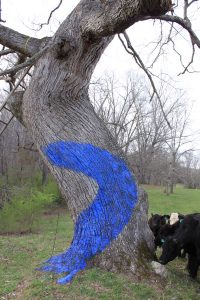
In June 2016 Reynolds Hills outskirts of New York teams of neighbours and children equipped with buckets of non toxic caesin set out to paint blue waves on selected tree trunks along the trajectory planned for the construction of a fracked gas pipeline. The blue sine waves were musical notes , if viewed from above the undulating score of blued trees were part of a greater symphonic sculpture. 

Photo credit :Robin Scully, Chinkapin Hill, Virginia 2016

Rahmani didn’t want to copyright the actual trees as it would too closely echoe Monsantos copyrighting of seeds so instead she copyrighted the entire artwork as a legal statement to the company Spectra to reconsider its construction plans which would pass a little over a 100 feet away from the back up electricity for a nuclear power plant Indian Point.  Alas the contractors for Spectra moved in and six months later the blued trees were gone.  


“Once I designed the project, I released it into the world and just trusted that others would do it right,” said Rahmani of Blued Trees . “We’ve all become part of the same habitat, and we’re all affected in the same ways.” Village Voice 29.06.2016

Other movements of ‘Blued Trees’ have sprung up along other proposed gas pipelines in Blacksburg Virginia, Conestoga Pennsylvania, and other places .

As we chatted by e mail about the current Covid era Rahmani said

“If we imagine Mother Earth is real and sentient, then she has designed the best installation performance event ever to drive home her points: lock up all the humans and make them forage for toilet paper.”


For more information on the project: 

https://www.villagevoice.com/2016/06/29/how-land-art-lived-and-died-to-stop-a-fracked-gas-pipeline-and-how-it-lives-again/

http://ghostnets.com/projects/blued_trees_symphony/blued_trees_symphony.html

A big thank you also to sculptor Jon Hudson for suggesting I contact Aviva Rahmani .

Memory Palace of Trees 2020 is an ecological art practice which invites your participation to tell a story (or give some kind of information) about trees. It is a social enquiry of how to live better with the planet and with people by simply sharing stories. You are cordially invited to tell me your story of a tree or trees. (email : niamh@niamhcunningham.com) I would love to hear from you. Each week throughout 2020 a story will be posted with either an artwork already made or perhaps your story will inspire me to make a new work!

Week 19 The Jackson Oak – the tree that owns itself


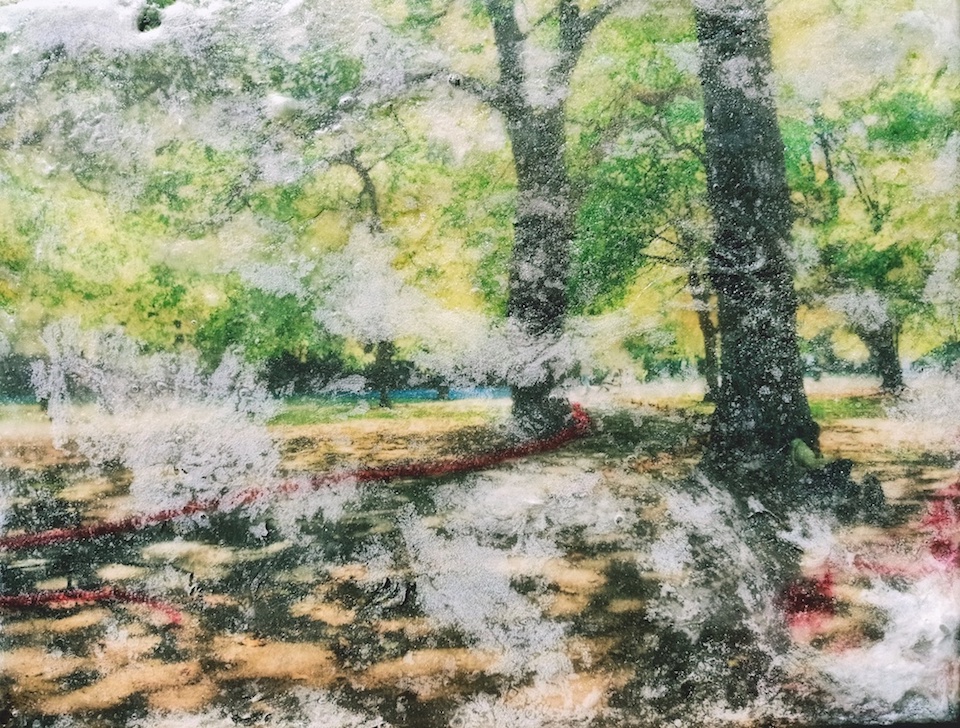
Stephen’s Green Walk (process photo may 05.05.2020) original sucrose 30x40cm Niamh Cunningham 倪芙瑞莲 2020

简体中文

This weeks story comes all the way from  Athens Georgia US.  There is a white Oak tree according to legend has legal ownership  of itself and the land within eight feet (2.4m) of it’s base. 

In the early 1800’s,  Colonel William H. Jackson,  a professor at University of Georgia gave ownership of the tree and the land within 8 feet on all sides of it, to the tree itself! A marker beside the tree quotes the Professor as saying, “For and in consideration of the great love I bear this tree and the great desire I have for its protection, for all time, I convey entire possession of itself and all land within eight feet of the tree on all sides”.


Sadly, the original owner (tree) that Colonel Jackson so loved, was blown down during a storm in the 1940’s. But, the progeny of this great Oak, a sapling grown from one of its acorns, was planted where its parent once stood and is now the proud owner of the spot. Even though the tree stands alone, it isn’t lonely. It gets quite a few visitors every year.


Memory Palace of Trees 2020 is an ecological art practice which invites your participation to tell a story (or give some kind of information) about trees. It is a social enquiry of how to live better with the planet and with people by simply sharing stories. You are cordially invited to tell me your story of a tree or trees. (email : niamh@niamhcunningham.com) I would love to hear from you. Each week throughout 2020 a story will be posted with either an artwork already made or perhaps your story will inspire me to make a new work!

Week 18 Ginkgo – Solitary and Unique

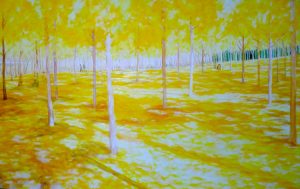
Week 18 Ginkgo Sea 银杏海 164 x 110 cm Niamh Cunningham 倪芙瑞莲2015 


简体中文

I hope you are keeping well and safe .

For this week’s Tree Story /Tree facts I am delighted to be in contact with senior research scientist Prof Peter Crane, Dean of the Yale School of Forestry & Environmental Studies (2009-2016),  director of the Royal Botanic Gardens, Kew, (UK) one of the largest botanical gardens in the world (1999-2009)  and current president of Oak Spring Garden Foundation (VA US).  Crane is also author of the book Ginkgo – the tree that time forgot.  

Some Ginkgo Facts:

Solitary and Unique:

There are only five living groups of seed plants, The five groups of living seed plants are: Ginkgo (only 1 species), cycads, conifers, flowering plants (angiosperms) and Gnetales (an obscure group). The ginkgo is the one that consists of just one species. It is solitary and unique and not very obviously related to any living plant.

Is the gingko leaf structure linked to its resilience?

The dichotomous venation of Ginkgo leaves is very strange—I don’t think anyone really understands how it came about—or what its functional significance might be.  In my opinion it is probably a simplification from leaves with more complex venation—but this is far from clear.  I’m not sure that it has anything in particular to do with the resilience of the species.

The ginkgo is mentioned in Chinese literature about 1,000 years ago. This is somewhat late for the cultivation of many plants in China. Evidence indicates that ginkgo was probably always a rather rare tree, and that it first attracted the attention of people about a thousand years ago.  It was moved around and grown for its nuts in China,  during the 14th or 15th centuries eventually  making its way up the coastal trade routes into Korea and Japan.

Peter Crane April 2020

Link: Oak Spring Garden Foundation

Link: Yale Environment 360  online magazine


Memory Palace of Trees 2020 is an ecological art practice which invites your participation to tell a story (or give some kind of information) about trees. It is a social enquiry of how to live better with the planet and with people by simply sharing stories. You are cordially invited to tell me your story of a tree or trees. (email : niamh@niamhcunningham.com) I would love to hear from you. Each week throughout 2020 a story will be posted with either an artwork already made or perhaps your story will inspire me to make a new work!